
Decision aid
Rotator cuff tear: is surgery right for me?
For people with a full-thickness rotator cuff tear who are weighing up repair against treatment without surgery.
Prepared by Mr Phil Wright, consultant shoulder and elbow surgeon. For educational purposes only.
The short version
Both options are reasonable for many tears, and the choice depends on you as much as on the scan. Treatment without surgery works well for many people and avoids an operation and a long recovery, but the tear does not heal and often slowly enlarges. Repair involves several months of rehabilitation and does not always heal, but in the one long-term trial it gave better results at ten years. This aid sets out what is known so you can discuss it at your appointment. Read the rotator cuff tear guide first if you have not already.
Is this aid for you?
It is written for people with a full-thickness tear that has come on gradually, or been found on a scan, with pain and some loss of function.
It does not apply in the same way if:
- the tear followed a definite injury and the arm became weak straight away. Early repair is usually advised, and you should be seen promptly.
- the tear is partial thickness, where treatment without surgery is nearly always tried first.
- the tear is very large and long-standing, with wasted muscle, where repair may not be possible and other options are discussed.
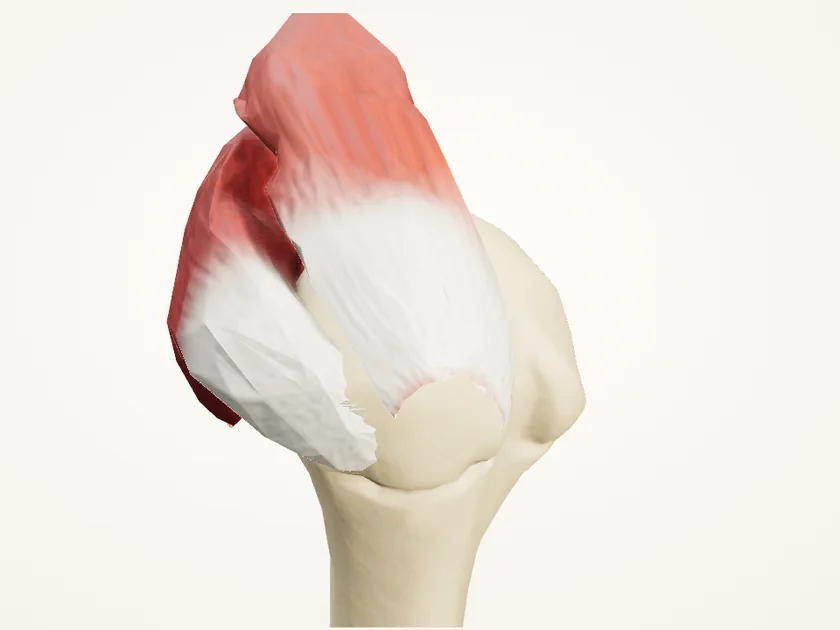
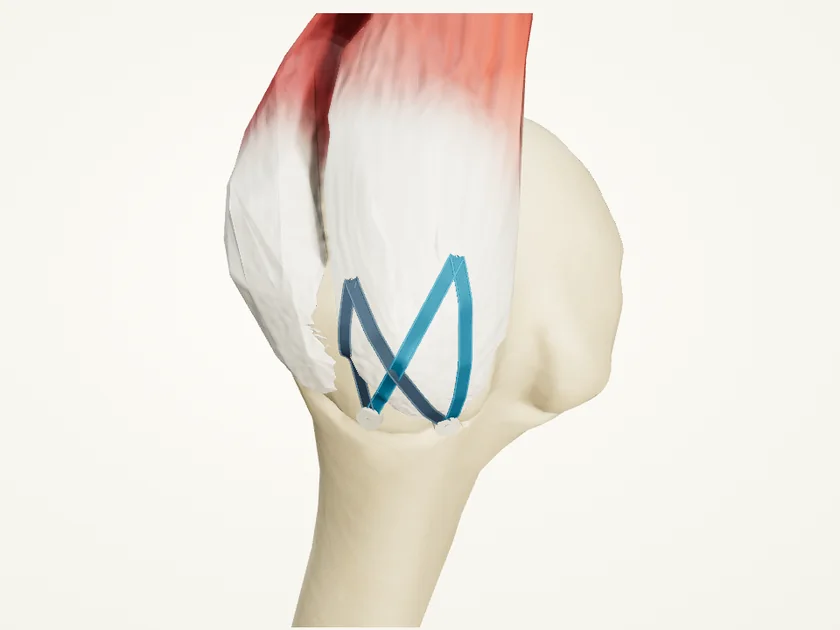
Illustrations from the Shoulder Solutions 3D model.
The two options side by side
| Treatment without surgery | Surgical repair | |
|---|---|---|
| What it involves | A structured exercise programme over three months or more, painkillers, and sometimes a steroid injection. | A keyhole operation under general anaesthetic, as a day case, to stitch the tendon back to the bone. |
| Recovery | No time in a sling. You carry on with normal life within the limits of pain. | Sling for 4 to 6 weeks. Driving at 6 to 8 weeks. Light use by 3 months, heavier work by 4 to 6 months. Improvement continues for a year. |
| Pain and function | Most people improve, and many are satisfied and never need surgery. | Most people improve. Results at one to two years are only a little better than without surgery, and the gap widens later. |
| The tear itself | Does not heal. Tends to enlarge slowly, and the muscle can waste, which may make a later repair harder or impossible. | Usually heals to the bone, but not always. Healing is less reliable in larger tears and with increasing age. A shoulder can still feel much better even when the repair has not fully healed. |
| Main downsides | Symptoms may persist or return. The tear may progress. | The risks of surgery: stiffness, infection, nerve injury, failure to heal, and the general risks of an anaesthetic. Months of restricted activity. |
| If it does not work | Repair can still be done later, though results were somewhat less good than with early repair in the trial below. | Further physiotherapy; occasionally further surgery. |
What the research shows
Repair compared with physiotherapy
A Norwegian trial randomly allocated 103 people with small or medium tears (up to 3 cm) to repair or to physiotherapy, with repair available later if physiotherapy failed. Both groups improved over the first two years, with only a small difference in favour of repair. By ten years the shoulders that had been repaired were clearly better, by about 10 points on a 100-point shoulder score, with less pain. Fourteen of the 51 people in the physiotherapy group had gone on to have a repair, and their results were not as good as those repaired at the start.1
What happens to a tear that is left
A study followed 224 painless shoulders, most of them with a cuff tear, using yearly ultrasound scans. About half of the tears enlarged, typically within three years, and full-thickness tears were the most likely to do so. Tears that enlarged were more likely to become painful.2 In the Norwegian trial, about 4 in 10 of the tears never repaired had grown by more than 1 cm at ten years, and those shoulders did poorly.3
These findings are the main argument for repair in someone who is younger and active. They matter less to someone who is older and places few demands on the shoulder.
Things that point one way or the other
| Favours trying without surgery | Favours repair | |
|---|---|---|
| Age and activity | Older, with modest demands on the arm | Younger, or with a physically demanding job or sport |
| How it started | Gradually, no injury | After an injury |
| Symptoms | Mainly pain, strength preserved, improving with exercises | Weakness, or pain that has not improved after a proper trial of exercises |
| The tear on the scan | Small, or so large and long-standing that it is unlikely to heal | Small to medium, good muscle quality, likely to heal |
| Your circumstances | Cannot manage weeks in a sling or months away from manual work; other health problems that add risk | Able to commit to the rehabilitation |
Questions to bring to your appointment
- How big is my tear, and what condition is the muscle in?
- How likely is a repair of my tear to heal?
- If I try exercises first, how will we know whether it is working, and will the tear be checked again?
- What would recovery mean for my work, driving and the people who depend on me?
- What matters most to me: avoiding an operation, getting back to a particular activity, or protecting the shoulder for the long term?
There is rarely a need to decide on the day. For a tear that came on gradually, a three-month trial of exercises first is a safe and common approach.
Sources
- Moosmayer S, Lund G, Seljom US, et al. At a 10-year follow-up, tendon repair is superior to physiotherapy in the treatment of small and medium-sized rotator cuff tears. Journal of Bone and Joint Surgery (Am) 2019;101:1050-60. PubMed record.
- Keener JD, Galatz LM, Teefey SA, et al. A prospective evaluation of survivorship of asymptomatic degenerative rotator cuff tears. Journal of Bone and Joint Surgery (Am) 2015;97:89-98. Full text.
- Moosmayer S, et al., ten-year results as reported by the lead author in Orthopedics Today, December 2019.
This guide is for educational purposes only. It is not to be used in place of consultation with a medical professional, and it cannot take account of your own circumstances.